
College Football Sim 2
Alec JacoSports
3.465.00 Reviews
- Version
- 1.1.7
- Installs
- 10.00K
- Age Rating
- Everyone
Screenshots
Our Review of College Football Sim 2
 Analysis by Appyee
I went into College Football Sim 2 expecting a fairly focused sports management experience, and that is exactly where its appeal lies. This is not a game built around controlling every play on the field. Instead, it asks whether I can make the decisions that gradually shape a college football program. That difference matters: the enjoyment comes from thinking ahead, weighing choices, and watching a team’s direction develop rather than chasing constant action.
Developed by Alec Jaco, the game is free to download and sits in the sports category for Android. It is aimed at an Everyone audience, so it is easy to approach if you want a football-themed strategy game without a complicated presentation or a demanding action-learning curve. The store summary asks whether you have what it takes to build a college football dynasty, but my experience is that the more useful question is whether you enjoy the patient side of sports: planning, adjusting, and accepting that progress is rarely immediate.
The first few sessions are helped by that clear premise. I can quickly understand what I am trying to do, and the college setting gives ordinary decisions a stronger sense of context than a generic team simulator. A win feels like evidence that a plan is working, while a poor stretch encourages me to reconsider the way I am building the program. That creates a pleasant loop during the first week, especially when I have a short break and want something more thoughtful than a quick arcade match.
Why the first week works, and where the novelty starts to settle
The early appeal comes from the fantasy of taking responsibility for a program that needs direction. I am not simply selecting a famous team and repeating a familiar season. The pleasure is in imagining what kind of program I want to create and then seeing whether my choices support that identity. Even when a session is brief, the game gives me a reason to return because the next decision feels connected to the previous one.
That makes it a better fit for players who enjoy sports management more than sports reflexes. If you want to feel every tackle, throw, or last-second drive directly through touch controls, this will not replace a traditional football game. The focus here is the broader career of a team. I found that distinction useful because it changes how I judge a result: a setback is not automatically a failure, and a victory is more satisfying when it fits into a longer plan.
One practical way to approach the opening is to avoid changing everything at once. When I treat each decision as an experiment, it becomes easier to understand what is helping the program and what is merely creating noise. Make one meaningful adjustment, observe the next stretch, and keep notes mentally about the result. That habit is more valuable than trying to optimize immediately, because a simulation becomes frustrating when every outcome is blamed on a different choice.
The game’s average rating is 3.4 from around 145 ratings, with around 65 written reviews. I read that as a sign of a niche title with a divided but interested audience rather than a universally polished blockbuster. The install count is over 10 thousand, which also places it in a smaller community than the major sports franchises. For me, that is neither automatically good nor bad: it suggests the game is worth approaching for its specific idea, not because it has the scale or presentation of a mainstream release.
During the first week, I would recommend playing in short, deliberate sessions instead of rushing through every available decision. A quick visit before work or while waiting for an appointment works well because the game’s appeal is reflective. I can check the state of the program, make a choice, and leave with a clear reason to come back. Longer sessions are possible, but they do not always add more enjoyment once the central decisions have already been made.
Another useful early habit is to decide what success means before the game starts making that decision for you. Some players will care about immediate results, while others will enjoy building a stable program over time. If I only judge the experience by the next outcome, I become impatient with the slower parts. If I judge it by whether my decisions create a believable direction, the simulation feels more rewarding and less like a string of disconnected results.
The difference between a football game and a football simulation
Compared with the usual alternatives in the sports category, College Football Sim 2 is deliberately narrower. A conventional football game offers direct control, visual spectacle, and the excitement of reacting in real time. This title is closer to a decision-making exercise with a college football theme. That makes it attractive for someone who enjoys roster-building ideas, season planning, and the emotional rhythm of a program, but less suitable for anyone who mainly wants action.
I also would not choose it as a substitute for a deep, presentation-heavy management game. Larger alternatives often provide more layers, richer interfaces, and a stronger sense of an active sports world. This game’s advantage is that it can be easier to pick up and less demanding to operate. The trade-off is that players who need a large amount of detail, elaborate visuals, or a constantly changing stream of content may find the experience modest after the initial curiosity fades.
The first-week question, then, is simple: do the decisions themselves interest you? If the answer is yes, the compact format can be refreshing. If the answer is no, the college football theme alone will probably not carry the experience for long. I would especially recommend trying it to fans who enjoy imagining how a program should be run, even if they do not normally spend time with management games.
What remains useful after the first month
The longer-term value depends on whether I enjoy repeating a planning cycle. A good sports simulation is not only about discovering its systems once; it needs to make another season feel worth starting. College Football Sim 2 has a reasonable foundation for that kind of habit because the core fantasy is open-ended. I can return with a different philosophy, take a more cautious approach, or try to recover from a poor run rather than treating the first outcome as the only story.
That said, repeat value here is personal rather than guaranteed. I do not see it as a game that will constantly surprise every type of player. Its appeal is strongest when I supply some of the imagination myself. I may set a private goal, such as prioritizing steady improvement or accepting a difficult rebuilding period, and that gives the next session meaning. Without that personal challenge, the routine can start to feel like maintenance rather than progress.
A useful monthly workflow is to play with a small review cycle. At the end of a stretch, I ask myself three questions: what was the original plan, which result challenged it, and what single change deserves attention next? This keeps the game from becoming a sequence of impulsive adjustments. It also creates a clearer sense of ownership, because I am evaluating my approach instead of waiting for the simulation to provide a dramatic storyline.
The free price makes experimenting easier. I can install it without committing money up front, which is helpful for a niche sports simulator that will not suit everyone. There are in-app purchases priced at $2.99 per item, so I would still recommend deciding early whether I am comfortable spending inside the game. The sensible approach is to enjoy the basic loop first and only consider an optional purchase if the game has already earned a regular place in my routine.
That distinction is important for long-term value. A purchase should not be used to rescue a routine that has already become dull. If I am returning because I genuinely want to make another decision, the game is doing its job. If I am returning only because I feel I have already invested too much time or money to stop, the habit is no longer healthy or enjoyable. The low entry cost gives players room to test that difference for themselves.
Compatibility is also fairly approachable. The current version is 1.1.7 and requires Android 5.1 or later, so the technical barrier is not aimed only at recent devices. I would still judge the experience on the phone I plan to use, particularly if I prefer a larger display for reading and reviewing information. For a game based on decisions rather than fast reactions, screen comfort matters more than raw speed.
One of the less obvious strengths is how well the game can fit into fragmented time. I do not need to reserve a full evening to get something from it. A short session can be enough to reassess a program and make a deliberate move. That makes it more practical than many sports games for commuting, waiting rooms, or a quiet break. The limitation is that fragmented play can also make the experience feel repetitive if I return without a clear objective.
How to prevent a promising save from becoming routine
I found that long-term enjoyment improves when I create boundaries around each session. Rather than opening the game and making every available decision automatically, I choose a purpose first. I might review the team’s direction, focus on one problem, or simply observe whether a previous adjustment is working. This prevents the game from turning into a checklist and gives each visit a beginning, middle, and end.
It also helps to accept imperfect seasons. A simulation becomes more interesting when I allow a plan to fail without immediately undoing it mentally. Starting over can be tempting, especially after an unwanted result, but continuing with the consequences produces a more distinctive story. That is one of the strongest ways to extend the game beyond its initial novelty: treat setbacks as part of the program’s identity rather than as errors that must be erased.
For players who prefer clear goals supplied by the game, this approach may feel like extra work. That is a genuine trade-off. The more of the narrative I create myself, the more personal the experience becomes, but also the more responsibility I take for keeping it interesting. Players who want a constant stream of missions, unlocks, or dramatic presentation may be happier with a larger sports management alternative.
Maintenance, friction, and the reasons fatigue can appear
The main maintenance burden is mental rather than technical. A program simulator asks me to remember why I made a decision and whether the result supports it. That is satisfying when I am engaged, but it can feel like homework when I am tired or only looking for a quick distraction. The game works best when I approach it with a little attention; it is not the ideal choice for completely passive play.
There is also a natural risk of repetition. Once I understand the central rhythm, some sessions may feel familiar, particularly if I keep using the same style of decision-making. I can reduce that fatigue by changing my goals, but the responsibility falls on me. If the game’s presentation or underlying variety does not give me enough reason to explore, the first-month excitement may gradually flatten.
The smaller scale is both a strength and a weakness. It keeps the experience approachable and avoids overwhelming me with layers I may never use. At the same time, players who compare it directly with established console or mobile football franchises may notice the difference in polish and breadth. I would not call that a flaw by itself, because the game is pursuing a more focused experience, but expectations need to be realistic.
Another point to consider is the rating profile. An average of 3.4 indicates that the game has not landed equally well for everyone. I would not use that figure alone to dismiss it, because niche simulations often divide audiences according to how much patience they demand. Still, it is a useful warning not to assume that the college football concept automatically guarantees a deep or endlessly engaging experience. The free download is the best way to test whether its particular rhythm suits me.
Fatigue is most likely when I play without reflecting. Clicking through decisions simply to reach the next result removes the part that makes the game distinctive. My best sessions are the ones where I pause long enough to ask what I am trying to build. If I cannot answer that, I usually get more enjoyment by stopping and returning later than by forcing another cycle.
There is a similar issue with the in-app purchases. At $2.99 per item, each one is not an enormous commitment, but repeated spending can change the value calculation for a small simulation. I would keep the free experience as the baseline and treat any purchase as optional support for a game I already use regularly. That approach protects the original appeal and avoids paying simply because progress feels slower than I expected.
Who should install it, and who should choose something else
I would point this game toward a player who likes college football as a setting but does not need to control every snap. It is also a good candidate for someone who enjoys compact management experiences, has patience for gradual progress, and likes inventing personal challenges. The free entry point makes it easy to sample during a short break, while the Everyone rating keeps the audience broad.
I would steer away from it if the main goal is licensed-style spectacle, live competition, detailed visual presentation, or immediate action. It is not the right choice for a player who wants to pick up a phone and feel the excitement of a complete football match through direct controls. It may also disappoint anyone who expects a large, constantly refreshed management universe rather than a focused simulation that asks the player to provide some of the imagination.
For everyday use, I can see it working well as a quiet evening game. I might check the program after dinner, review what happened since the previous session, make one considered adjustment, and close it before the routine becomes tiring. That is a better use case than trying to fill a long gaming session with uninterrupted activity. Its value comes from returning thoughtfully, not from demanding all of my attention.
My long-term verdict on keeping it installed
After the novelty fades, College Football Sim 2 earns space on my phone only if I actively enjoy the role of planner. Its strongest quality is the focused college football premise and the way it turns ordinary decisions into a longer personal story. I like that I can approach it in short sessions, set my own objectives, and continue through setbacks rather than needing a perfect run.
Its weaknesses are just as clear. The experience can become repetitive when I stop bringing my own goals to it, and players seeking action or a broad, presentation-rich football package will find better alternatives elsewhere. The modest community and 3.4 average rating reinforce that this is a specific taste, not an automatic recommendation for every sports fan.
Still, I think the free price makes the experiment worthwhile. I would install it, spend enough time with the basic loop to see whether I look forward to the next decision, and avoid treating optional purchases as a solution to fading interest. The current version, 1.1.7, supports the straightforward appeal of a compact sports simulation, while the Android 5.1 requirement keeps it accessible to a wide range of devices.
My honest recommendation is conditional but positive: keep it installed if you enjoy building a program through patient choices and personal challenges. Give it a pass if you need constant action, deep presentation, or a highly varied management world. For the right player, Alec Jaco’s game can become a pleasant recurring habit, especially in short sessions. For everyone else, the first-week curiosity may be the best part, and there is no reason to force it into a permanent place on the phone.
Verdict
Strengths of College Football Sim 2
- Deep season simulations with meaningful team and player decisions.
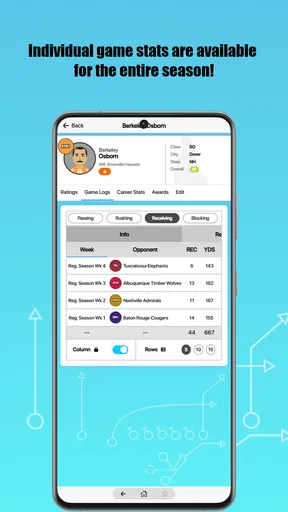
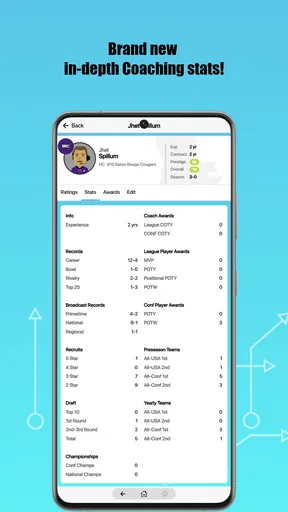
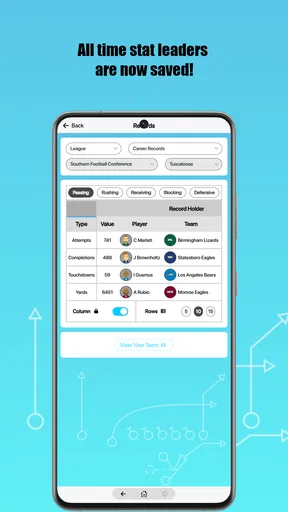
- Detailed statistics help track progress and compare performances.
- Offers long-term dynasty appeal beyond a single season.
- Simple interface makes core coaching actions easy to understand.
- Works well for fans who enjoy strategy over real-time gameplay.
Limitations of College Football Sim 2
- The learning curve may feel steep for players new to sports simulations.
- Some menus and screens can feel dated or less intuitive.
- Simulations may take time when managing multiple seasons.
- Limited visual presentation compared with modern football games.
- Results can feel unpredictable when team ratings are closely matched.
Similar Picks in This Category
View All
8 Ball Pool
Miniclip.com4.8

Pooking - Billiards City
AIM TOP GAME TECHNOLOGY LIMITED - pool4.6

Carrom Pool: Disc Game
Miniclip.com4.4

EA SPORTS FC Soccer Mobile 26
ELECTRONIC ARTS4.6

World Soccer League
mobirix4.3

Soccer Cup 2026: Football Game
INLOGIC SPORTS - football tennis golf soccer4.3
Frequently Asked Questions
What is College Football Sim 2?
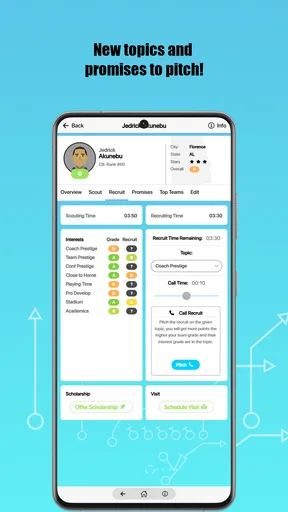
College Football Sim 2 is a strategy and management game focused on running a college football program. Instead of controlling every player directly on the field, you typically make decisions involving recruiting, team development, tactics, lineups, scheduling, and program progression. It is designed for players who enjoy planning and long-term management more than fast-paced arcade gameplay.
How do you play College Football Sim 2?
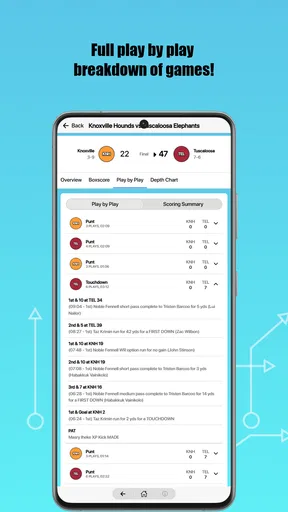
Gameplay centers on making decisions that improve your team over multiple seasons. You may need to recruit promising athletes, manage the roster, choose offensive and defensive strategies, prepare for opponents, and balance short-term results with long-term development. Matches are generally experienced through simulations and results, so thoughtful planning and understanding team strengths are more important than reflexes.
Is College Football Sim 2 free to download and play?
The availability and pricing of College Football Sim 2 can depend on the platform and store listing you use. Before downloading, check the official Google Play or App Store page for the current price, supported devices, advertisements, and any in-app purchases. Store policies and updates may change, so the information shown on the official listing should be treated as the most reliable source.
Does College Football Sim 2 require an internet connection?
The game may allow some management and simulation features to work offline, but connection requirements can vary by version and device. Online access may be needed for downloading the game, receiving updates, synchronizing progress, or using specific features. If you plan to play while traveling, test the main modes without Wi-Fi first and review the developer’s latest requirements before relying on offline access.
Is College Football Sim 2 suitable for beginners?
College Football Sim 2 can be suitable for beginners who enjoy sports management games, although its systems may take time to understand. New players should expect to learn how recruiting, player development, tactics, schedules, and team finances or resources work. It is less focused on instant action and more rewarding for users who like experimenting, reviewing results, and gradually building a successful college football program.
Play our best games!


